
AGI For One, Please
Why I no longer think general intelligence has to be universal

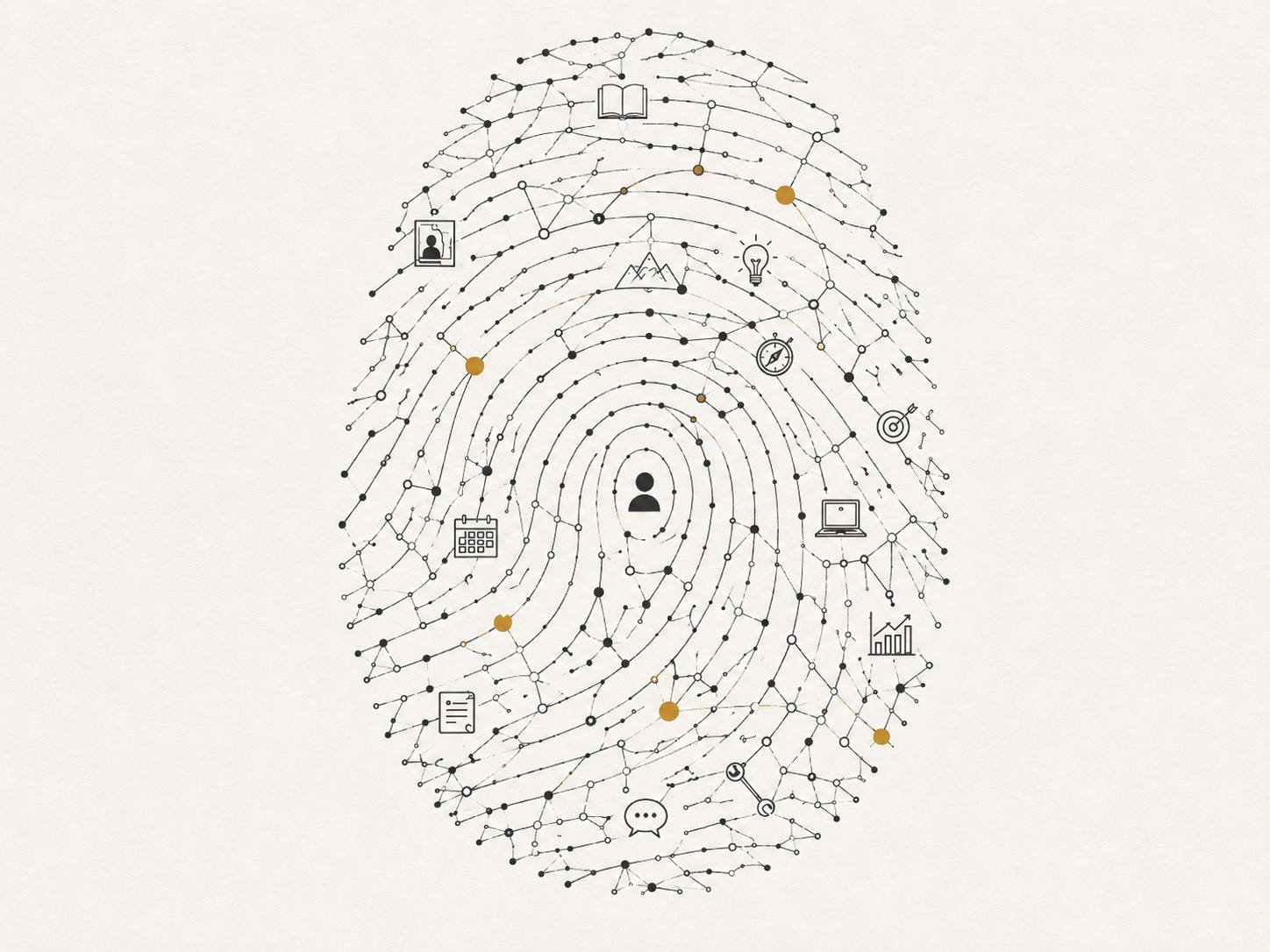
I thought I understood what the “general” in artificial general intelligence meant and that AGI is somethng that would be able to reason, learn and solve problems across a wide range of domains.
OpenAI has historically defined AGI around highly autonomous systems that outperform humans on economically valuable work and DeepMind defines it through breadth and performance, separating how general a system is from how capable it is and how autonomously it operates.
So, at one point, I had assumed that general meant universal, one intelligence that could become useful to almost anyone, across almost anything.
I am starting to question that assumption now.
Look at humans.
We have general intelligence, yet there is no generic version of a human mind. What we become capable of changes as we accumulate experience, so a doctor, founder, lawyer and musician may share broad cognitive abilities while developing very different knowledge, judgement and ways of solving problems.
Personal AGI
The concept of personal AGI is built around an individual and it understands and represents their context, learns from experience, and helps identify and solve the problems they care about in pursuit of their goals.
This will sit inside ones personal work, family, finances, health, relationships, ambitions and responsibilities, and they include the things an individual is trying to build, the things they want to learn, the decisions in front of them, the commitments they have made and the goals they may later change.
That takes more than knowing preferences or reproducing a writing style.
A Stanford-led team created agents representing 1,052 real people using two-hour interviews and survey data. The researchers then tested whether those agents could predict how participants would respond to questions and experiments they had not been specifically built for. The combined interview-and-survey agents reached 86% of participants’ own two-week test-retest consistency on held-out survey questions, and also predicted aspects of personality, economic-game behaviour and experimental responses.
That study used hours of context. A personal system could eventually accumulate years.
The personal layer can outlive the model
The models underneath AGI, I think, will be changing constantly. It will not be one but perhaps multiple models… one might be better at reasoning, another at code, and a smaller model could run locally for information I want to keep private. A new model could replace all three next year.
If I spend ten years building an intelligence around my life, I care less about which model generates a particular answer than whether I keep the context and capability accumulated over those ten years.
The advantage compounds
Now, imagine two people have access to exactly the same foundation models for five years.
One uses them when a task comes up from drafting this email, researching this company, analysing this document, building this presentation, and each interaction is useful, and each one starts from the task in front of them.
While the other builds the layer around the models that includes their system that remembers previous decisions and that knows what happened afterwards. It is connected to the tools they use and share their corrections, feedback, and that feedback will change how it will behaves
After five years, the underlying models may still be identical (if they don’t swap it) and the capability surrounding them will differ. Money, compute and access come into play with what each person can build, and so does the skill to make something worth accumulating.
Those differ because we do.
Build the personal infrastructure
We can already start creating some of the infrastructure a future Personal AGI would need.
Memory that persists and moves - context I accumulate should survive every change of model or product.
Outcomes as well as conversations - knowing what happened afterwards gives AGI something to learn from.
A representation of goals - goals help a system understand why those tasks matter and recognise problems I have yet to point out.
Skills that accumulate - when it repeatedly learns how I perform a piece of work, that knowledge should become reusable capability rather than sending me back to a blank prompt each time.
Agency with permissions - the system should know what it can do, what requires approval and where it has earned greater autonomy through performance.
Connect these well and we move a step closer to “AGI.”
Two people could use the same models and build different intelligences, because the things those systems remember, learn, care about and act upon come from different lives.
The frontier labs will keep building better models and our part may be building the infrastructure that gives those models something worth accumulating around.
All the zest, 🍋
Cien
Cien Solon is a founder and AI transformation strategist working at the intersection of people, platforms, and power. Through LaunchLemonade, she helps organisations design AI systems that are dependable, governable, and human-centred.
Sources and Further Reading
OpenAI’s definition of AGI The OpenAI Charter defines AGI as “highly autonomous systems that outperform humans at most economically valuable work.” https://openai.com/charter/
Google DeepMind’s framework for AGI Morris et al., “Levels of AGI for Operationalizing Progress on the Path to AGI” (Google DeepMind, 2023). This is the paper that separates generality from performance and autonomy.
DeepMind publication page: https://deepmind.google/research/publications/66938/
The Stanford 1,052-person study Park et al., “Generative Agent Simulations of 1,000 People” (2024). The study behind the 86% test-retest consistency figure.
Accessible summary from Stanford HAI: https://hai.stanford.edu/news/ai-agents-simulate-1052-individuals-personalities-impressive-accuracy
The earlier Stanford generative agents experiment (the “Smallville” paper) Park et al., “Generative Agents: Interactive Simulacra of Human Behavior” (2023). The memory, retrieval and reflection architecture described in the “Memory is not learning” section. https://arxiv.org/abs/2304.03442
Mark Zuckerberg’s “personal superintelligence” letter (July 2025)
The letter itself: https://www.meta.com/superintelligence/
Meta newsroom version: https://about.fb.com/news/2025/07/personal-superintelligence-for-everyone/
OpenAI’s “personal AGI” language “Built to benefit everyone: our plan” (OpenAI, June 2026). Contains the line “Give everyone on Earth a personal AGI.” https://openai.com/index/built-to-benefit-everyone-our-plan/
Garry Tan, “Own Your Intelligence” YC Startup Library entry for the talk referenced in the piece. https://www.ycombinator.com/library/WX-garry-tan-own-your-intelligence
MemGPT: Towards LLMs as Operating Systems (Packer et al., 2023) The paper that kicked off much of the practical work on giving language models managed, persistent memory. Useful technical grounding for the “memory is not learning” distinction. https://arxiv.org/abs/2310.08560
The Gentle Singularity (Sam Altman, June 2025) Altman’s essay on how superintelligence arrives gradually. A useful counterpoint on where intelligence accumulates, labs versus individuals. https://blog.samaltman.com/the-gentle-singularity
The Myth of AGI (Tech Policy Press) A sceptical take on the AGI framing itself, worth reading against the piece’s own doubts about whether “AGI” is the right word. https://www.techpolicy.press/the-myth-of-agi/