
The Great Migration From ChatGPT Has Begun
Claude, Gemini, and the end of the default AI

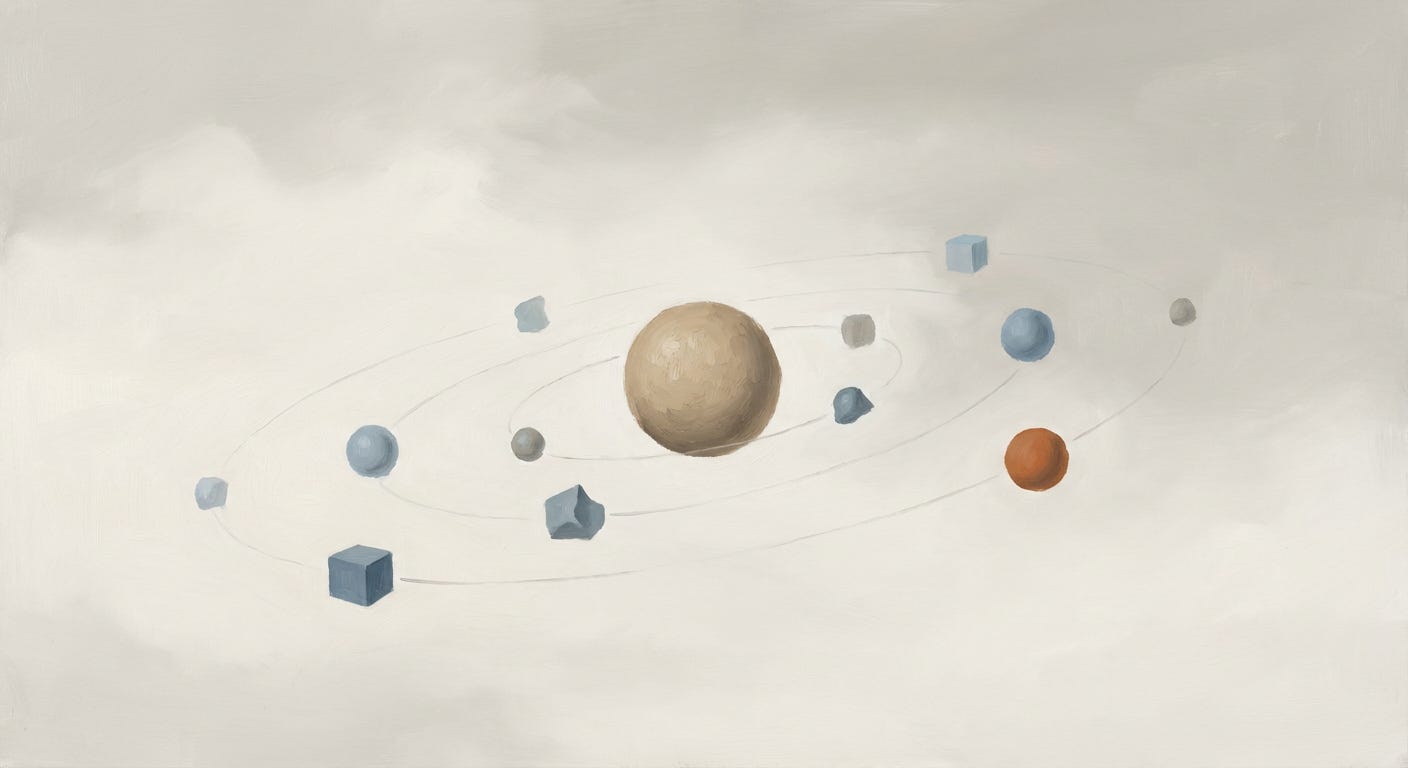
A few months ago, “AI” meant one thing in most boardrooms: ChatGPT.
It was the safe default, the tab that stayed open, and the place you sent your team when they asked, “Which one should we use?”
That default is slipping, and it shows up in behaviour first.
Over the past four weeks, I have watched people reorganise their habits. Power users are switching because workflows are beating wow-factor, and Claude Code has become a genuine daily driver for the people who build. At the same time, business leaders are paying attention to models they do not consciously “choose”, because distribution makes the choice for them. Apple’s decision to align parts of its device intelligence with Gemini helps define what becomes normal before anyone debates which tool is best.
That combination changes the shape of the market.
It no longer looks like a single winner. It looks like an operating layer, with different kinds of work pulled into different places.
This is the great migration.
Not a mass exit, but a slow shift in where work begins. And that is the part that rewrites power.
How defaults actually change
Defaults are not chosen in a rational moment. They form through repetition.
ChatGPT became home base because it was easy to reach, broadly capable, and culturally familiar. Work began there because it required no explanation and over time, that pattern felt stable, even inevitable.
But, as AI moves from experimentation into daily work, people stop chasing novelty and start prioritising predictability. They care about how a tool behaves under pressure, how it handles long chains of thought, large codebases, and messy real-world inputs. They care about where it lives, how often it interrupts, and whether it feels safe enough to trust with consequential work.
Once credible alternatives meet those expectations, defaults start to loosen. The starting point changes a few inches at a time, until one day it is somewhere else entirely.
The Forces That Matter Now
In this phase, raw capability matters less than three structural forces.
Placement.
Intelligence embedded inside existing products, devices, and workflows shapes behaviour before preference has time to form. When AI appears at the moment work happens, it becomes automatic. Automatic quickly becomes assumed.
Workflow ownership.
Tools that commit to specific jobs earn depth rather than breadth. Depth compounds. Once a system understands context, constraints, and consequences, switching becomes costly, even when alternatives look impressive.
Trust density.
As AI moves closer to production systems, sensitive data, and irreversible actions, reliability matters more than brilliance. The tools that feel predictable under pressure become the ones people will depend on.
This is the blueprint emerging across the market.
Not one AI to rule them all, but intelligence distributed across contexts.
The Stack Mentality
When defaults dissolve, people build a stack.
Different models for different tasks. Writing, coding, searching, analysing, reasoning. The behaviour becomes modular, and with it, a new centre of gravity forms.
This stack is a layer that lets teams orchestrate models, lock in knowledge, control outputs, and ship repeatable workflows without becoming prompt janitors. The winners in this phase will be the platforms that make multi-model work feel normal, governable, and scalable.
This is where the power shifts from intelligence to agency.
If you are running a business, the important question is no longer “Which model do we back?” It is “How do we make AI dependable across the organisation, even as the models change?” That is why platforms like LaunchLemonade benefit from the migration. They are built for a world where the default is not a model, but a workflow.
And once organisations start thinking in workflows, they rarely go back.
The Bottomline
The great migration is not a rejection of AI. It is a sign that people are ready to use it properly.
And once that happens, the future belongs less to the loudest model, and more to the systems that let humans stay in control as the machines get better.
All the Zest 🍋
Cien
What a coincidence! Just yesterday, literarily, I was sharing with a colleague about how my AI habits changed – from habitual allegiance to ChatGPT to varying models depending on the task in hand and forming rational workflows. Good to know this is not a personal peculiarity 😊